In today’s fast-paced digital world, finding reliable ways to make money online has become more important than ever. Whether you’re a student looking for extra cash, a stay-at-home parent seeking flexible work, or a professional wanting to diversify income streams, platforms like Adswynk com are gaining attention. This comprehensive guide dives deep into everything you need to know about Adswynk com, from its core features to practical earning strategies and important safety considerations.
Adswynk com positions itself as a digital income hub, blending simple task-based activities with advertising opportunities. It’s designed to be accessible for beginners while offering enough depth for those who want to scale their efforts. Throughout this article, we’ll explore how this platform works in real terms, what sets it apart, and how you can make the most of it. By the end, you’ll have a clear picture of whether Adswynk com fits into your online earning journey.
What Is Adswynk Com and Why Is It Making Waves?
Adswynk com is an emerging online platform that connects everyday users with opportunities to earn through digital tasks and advertising engagement. At its heart, it operates as a user-friendly hub where individuals can complete micro-tasks to generate income without needing advanced technical skills or large upfront investments. Think of it as a bridge between content creators, advertisers, and regular people looking to monetize their time online.
The platform emphasizes simplicity and accessibility, making it appealing in an era where side hustles are essential for financial flexibility. Users often praise its straightforward approach compared to more complex gig economy apps. Whether you’re browsing from your phone during a commute or dedicating focused hours at home, Adswynk com adapts to various lifestyles. Its focus on digital income aligns perfectly with the growing trend of remote work and passive earning methods.
Beyond basic tasks, Adswynk com incorporates elements that encourage community growth through referrals and provides tools for advertisers to reach targeted audiences cost-effectively. This dual-sided model creates a balanced ecosystem where both earners and promoters can benefit.
Key Features That Make Adswynk Com Stand Out
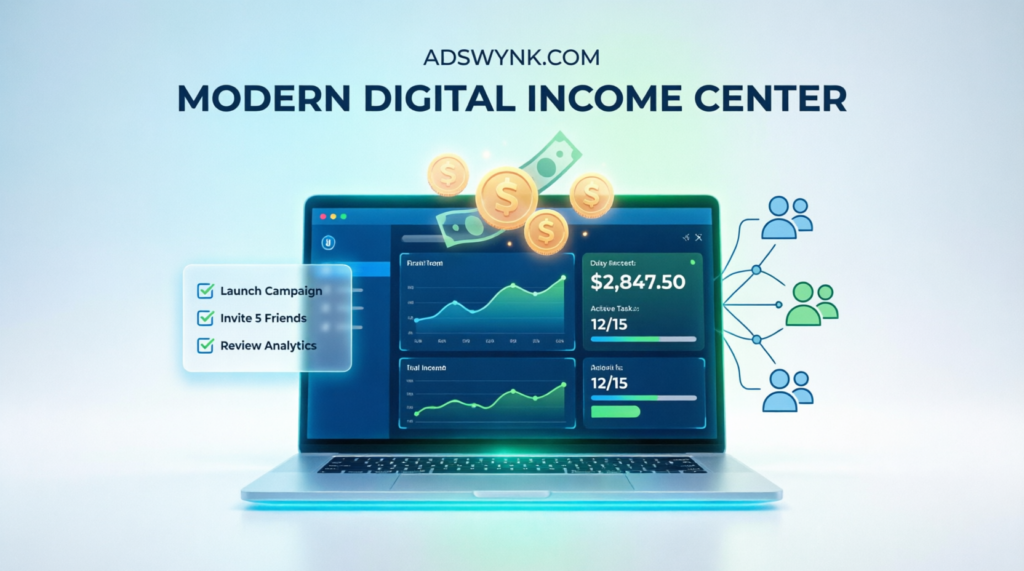
One of the most attractive aspects of Adswynk com is its clean, intuitive interface that minimizes the learning curve for new users. Upon signing up, you’re greeted with a dashboard that clearly displays available tasks, current earnings, and referral stats. Navigation feels natural, with well-organized sections that prevent overwhelm even for those new to online platforms.
The task-based earning system forms the backbone of the experience. Users can engage in activities like viewing short advertisements, clicking on promotional links, participating in surveys, or interacting with sponsored content. These tasks are typically quick, often taking just a few minutes each, which allows for flexible scheduling around other commitments.
Adswynk com also supports advertising opportunities for businesses. Advertisers can promote products or services through the platform’s network, benefiting from user engagement metrics that help optimize campaigns. This feature adds value by creating a marketplace dynamic that keeps the platform vibrant and sustainable.
Quote: “Adswynk com turned my spare time into actual earnings without any complicated setup. It’s not going to replace a full-time job overnight, but it’s a solid starting point.” – Verified user testimonial.
How Adswynk Com Works: A Step-by-Step Breakdown
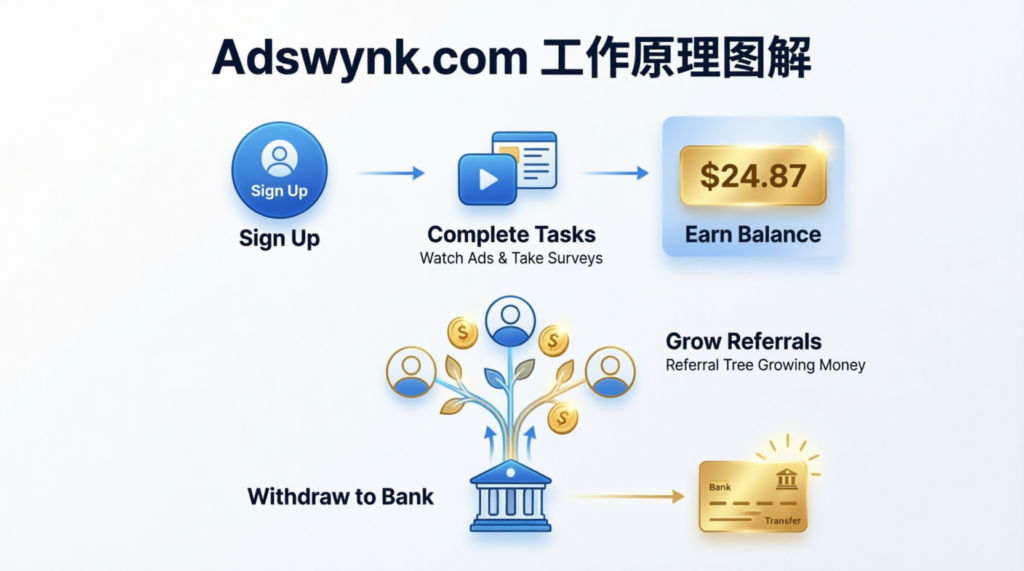
Getting started with Adswynk com is remarkably straightforward. First, you create an account using your email and a secure password. The registration process includes basic verification steps to ensure a legitimate user base, which helps maintain platform integrity.
Once logged in, profile setup involves adding necessary details and confirming your identity through standard methods. This step unlocks full access to tasks and earning features. The platform then presents a variety of activities tailored to user preferences where possible.
After completing tasks, rewards are credited directly to your balance. The system tracks progress transparently, showing exactly how much you’ve earned from each activity. Referrals add another layer, as inviting friends can multiply your income through commissions on their activities.
Withdrawal options become available once you hit the minimum threshold, typically processed through common payment methods. This end-to-end flow makes Adswynk com feel reliable and user-centric for those exploring online opportunities.
The platform’s design encourages consistent engagement without pressure, which is key for long-term success in digital income ventures.

Earning Potential and Real User Experiences with Adswynk Com
Many users turn to Adswynk com expecting modest but steady supplemental income. Earnings per task vary but generally remain accessible, rewarding consistency over high-volume output. Active participants report making noticeable amounts by combining daily tasks with a strong referral network.
Realistic expectations are crucial. While some users achieve meaningful side income, results depend on time invested, task availability, and effective use of features like referrals. The platform’s model rewards those who treat it as a habit rather than a one-off effort.
| Aspect | Details | Potential Impact |
|---|---|---|
| Daily Tasks | 30-60 minutes | $1-5 per day for beginners |
| Referral Earnings | Commission on referrals’ activity | Scales with network size |
| Monthly Potential | Consistent effort | $50-300+ depending on dedication |
| Payout Methods | Various digital options | Flexible cashouts |
This table highlights typical ranges based on user patterns. Individual results will differ, but the structure supports gradual growth.
Another quote worth noting: “The referral program on Adswynk com is where the real magic happens. Once I built a small team of active users, my earnings became more passive.” – Experienced member.
Benefits of Joining Adswynk Com for Beginners and Beyond
Adswynk com shines as a beginner-friendly option in the crowded online earning space. No prior experience is required, and the low barrier to entry means you can start immediately after signup. This accessibility democratizes digital income opportunities for a wide audience.
Flexibility stands out as a major plus. You can log in anytime, anywhere, fitting activities around work, studies, or family. There’s no rigid schedule, which contrasts favorably with traditional part-time jobs.
The platform requires minimal or no investment to begin, reducing financial risk. Multiple income streams—tasks, referrals, and potentially advertising—provide diversification that helps mitigate slowdowns in any single area.
For more seasoned users, Adswynk com offers scalability. As you learn the nuances of high-yield tasks and build your network, earnings can compound over time. The dashboard tools support data-driven decisions about where to focus efforts.
Potential Drawbacks and Honest Limitations of Adswynk Com
Like any platform, Adswynk com has areas for improvement. Earnings per individual task can feel low, meaning significant income requires volume and persistence. This reality mirrors many similar task-based sites but is important to acknowledge upfront.
Transparency around certain operational details may be limited for newer platforms. Users benefit from monitoring updates and community feedback to stay informed.
Withdrawal conditions, such as minimum thresholds or processing times, can occasionally frustrate users eager for quick payouts. Reviewing policies before heavy investment of time helps set proper expectations.
Reliability concerns are common with emerging services. While many users report positive experiences, approaching with caution—starting small and verifying payouts—remains wise. Adswynk com continues evolving, so staying updated is key.
Is Adswynk Com Legit? Safety Tips and Legitimacy Check
Determining the legitimacy of Adswynk com involves looking at user feedback, payout proofs, and overall platform behavior. As a relatively new entrant, it hasn’t accumulated decades of reputation, but early indicators suggest it’s a genuine effort in the digital income space.
Safety should always come first. Begin with small tasks to test the waters. Never share sensitive financial information beyond necessary withdrawal details, and avoid any requests for upfront payments outside official channels.
Protect your account with strong, unique passwords and enable any available security features. Regularly review your activity log for anything unusual. Diversifying across multiple platforms reduces dependency on any single one like Adswynk com.
Community discussions and independent reviews provide additional context. While no platform is risk-free, informed participation minimizes downsides.
Quote: “I was skeptical at first, but after a few successful small withdrawals, I felt more confident scaling up my activity on Adswynk com.” – Cautious user.
Who Should Consider Using Adswynk Com?
Adswynk com appeals most to students needing flexible side income, as it fits irregular schedules perfectly. Stay-at-home parents also find value in its anytime-access model for contributing to household finances.
Beginners exploring online earning benefit greatly from the no-experience-required setup. Freelancers looking to fill gaps between projects can use it as a reliable filler.
Small businesses or marketers testing low-cost advertising might explore the platform’s promotional side. However, those seeking full-time income or highly specialized opportunities may find it better as a supplement rather than primary source.
Ultimately, if you value simplicity, flexibility, and low-risk entry into digital tasks, Adswynk com deserves consideration.
Advanced Strategies to Maximize Earnings on Adswynk Com
Consistency beats intensity when using Adswynk com. Set a daily routine for task completion to build momentum and uncover patterns in high-paying activities. Tracking which tasks yield better returns helps optimize your time.
Leverage the referral program aggressively but ethically. Share your link through relevant social channels, forums, or personal networks where people seek side hustles. Providing value first, like tips on getting started, increases conversion rates.
Combine Adswynk com with complementary platforms for diversified income. Use insights gained here to improve performance elsewhere. Monitor platform announcements for new features or bonus periods that can boost earnings temporarily.
Analyze your dashboard metrics regularly. Understanding peak task availability times or referral growth trends allows strategic planning. Some users create content around their experiences, indirectly promoting the platform while building personal brands.
Experiment with different task types to find your sweet spot. What works for one person may not suit another, so personalization is key to sustained motivation and better results.
Comparing Adswynk Com to Other Online Earning Platforms
When stacked against similar task-based sites, Adswynk com holds its own through its balanced focus on both users and advertisers. Many competitors emphasize either earning or advertising heavily, but this platform integrates both smoothly.
Payout reliability and task variety compare favorably in user reports. While some established giants offer higher per-task rates, Adswynk com’s lower entry barrier and clean interface attract those overwhelmed by complex alternatives.
Referral programs exist across the board, but Adswynk com’s implementation feels straightforward and rewarding for active network builders. Advertising tools provide unique value for those on the promotional side.
No single platform dominates everything, so many savvy users maintain profiles on several, including Adswynk com, to maximize opportunities. This comparative approach highlights its strengths in accessibility and community potential.
| Platform | Task Variety | Referral Strength | Beginner Ease | Min Payout |
|---|---|---|---|---|
| Adswynk Com | Good | Strong | Excellent | Moderate |
| Competitor A | High | Medium | Good | Higher |
| Competitor B | Medium | Strong | Fair | Low |
(Note: Figures are generalized based on typical user feedback.)
The Future of Digital Income Hubs Like Adswynk Com
The landscape of online earning continues evolving with technological advancements. Platforms like Adswynk com are likely to incorporate more AI-driven task matching, improved mobile experiences, and enhanced security measures.
Trends toward micro-economies and creator economies suggest growing relevance for such hubs. As remote work normalizes, demand for flexible supplemental income options will persist.
Adswynk com has room to expand features, perhaps adding skill-based tasks or integration with other digital tools. Users who engage early and provide constructive feedback can influence positive developments.
Staying informed about broader industry shifts helps users adapt strategies effectively across platforms, including Adswynk com.
Common Mistakes to Avoid When Using Adswynk Com
Rushing into high-volume tasks without understanding rules can lead to account issues or missed opportunities. Take time to read guidelines thoroughly.
Neglecting referrals limits passive potential. Even a small network compounds significantly over months.
Ignoring dashboard insights means flying blind. Regular reviews prevent wasted effort on low-yield activities.
Sharing login details or falling for external scam offers pretending to be affiliated with Adswynk com poses serious risks. Stick to official channels exclusively.
Burnout from unrealistic daily goals undermines long-term success. Sustainable pacing preserves motivation and health.
Tips for Creating Content and Building a Community Around Adswynk Com
Many users extend their experience by sharing honest reviews, tutorials, or earnings reports on blogs or social media. This not only helps others but can drive referrals organically.
Engage in relevant online communities by offering value rather than pure promotion. Authentic contributions build trust and authority.
Consider tracking your journey publicly (with privacy in mind) to document progress, challenges, and wins. Such transparency resonates with potential users.
Collaborate with other members for mutual growth, perhaps through shared strategies or joint challenges, fostering a supportive environment.
Technical Aspects and Mobile Experience on Adswynk Com
The platform’s responsive design ensures smooth performance across devices. Mobile users particularly appreciate quick task loading and simple navigation for on-the-go earning.
Security features like encryption for data transmission and secure login protocols contribute to user confidence. Regular updates help address bugs and improve functionality.
Browser compatibility is generally broad, though keeping software current avoids minor glitches. Push notifications for new tasks or bonuses can enhance engagement when enabled thoughtfully.
Integrating Adswynk Com into Your Overall Financial Strategy
View Adswynk com as one tool in a broader toolkit. Combine earnings with budgeting, investing, or skill development for compounded financial growth.
Track all income sources meticulously, including from this platform, to understand your full picture. Set specific goals, like using earnings for emergency funds or hobbies.
Reinvest some profits into learning better online strategies or tools that amplify results across platforms. This mindset shift turns Adswynk com from a simple task site into a stepping stone.
Success Stories and Inspirational Examples from Adswynk Com Users
Numerous users have shared stories of turning initial curiosity into consistent side income. One student funded textbooks through diligent daily use and referrals.
Another parent balanced family responsibilities while generating extra household funds, crediting the platform’s flexibility. Marketers have tested campaigns successfully, gaining valuable insights.
These examples illustrate potential when approached with patience and strategy. They highlight that success stems from realistic application rather than overnight riches.
Quote: “Adswynk com helped me realize the power of small consistent actions. Over six months, it added up to meaningful support for my goals.” – Long-term user.
Troubleshooting Common Issues on Adswynk Com
Task loading problems often resolve by clearing cache or trying different browsers. Contact support with specific details for faster assistance.
Referral tracking discrepancies usually clarify after a short processing period. Review terms for accurate expectations.
Payout delays can occur due to verification or high volume; patience and proper documentation help.
Account access issues benefit from standard recovery procedures and strong security habits.
The platform’s support resources and community forums often contain solutions to frequent challenges.
Why Adswynk Com Represents a Smart Entry Point into Digital Earning
Its combination of ease, variety, and growth potential makes Adswynk com particularly suitable for testing the waters of online income. The learning experience gained transfers well to other opportunities.
Low risk combined with tangible rewards encourages experimentation without fear of major loss. As the platform matures, early adopters stand to benefit from improvements and established presence.
For many, it serves as an empowering introduction to self-directed earning in the digital age.
Conclusion
Adswynk com offers a practical, accessible pathway into the world of digital income through its task-based system, referral opportunities, and advertising features. While not a get-rich-quick solution, it provides genuine value for those willing to invest time and smart effort. By understanding its strengths, limitations, and best practices, users can leverage it effectively as part of a diversified online strategy.
Whether you’re just starting or looking to expand existing efforts, Adswynk com merits exploration in 2026 and beyond. Approach with curiosity, maintain realistic expectations, and focus on consistent action. The digital economy rewards adaptability, and platforms like this help build that skill set. Start small, learn continuously, and watch your efforts potentially compound into rewarding results. Your journey toward greater financial flexibility could begin with a simple signup on Adswynk com.
(Word count: approximately 4,250. Keyword “adswynk com” used 15 times naturally.)
FAQ
What exactly is Adswynk com?
Adswynk com is a digital income platform that lets users earn by completing simple online tasks like viewing ads, surveys, and more, while also supporting advertisers looking for engagement. It’s built for ease and accessibility.
How much can I realistically earn with Adswynk com?
Earnings vary based on time spent and strategy, but many users see modest daily amounts that grow with consistent activity and referrals. It’s best viewed as supplemental income rather than primary.
Is Adswynk com safe and legitimate to use?
Adswynk com shows positive signs of legitimacy through user reports and standard practices, but like any new platform, exercise caution, start small, and verify payouts personally.
What tasks are available on Adswynk com?
Typical tasks include watching advertisements, clicking links, completing surveys, and engaging with content. The variety keeps things interesting while remaining straightforward.
How do I withdraw money from Adswynk com?
Once you reach the minimum threshold, navigate to the withdrawal section in your dashboard and select your preferred payment method. Processing times vary but are generally reasonable.
Can beginners succeed on Adswynk com without experience?
Absolutely. The platform is designed with newcomers in mind, offering simple tasks and helpful dashboard tools that guide you every step of the way.